The Impact of Work on Mental Health: How to Manage Stress
Learn about Stress and Anxiety Therapy here.
At Mountains Therapy, we know there are increasingly demanding work environments, so it’s no surprise that workplace stress is a common issue many of us face. While a fulfilling career can provide a sense of purpose, constant pressure, high expectations, and job insecurity can lead to various mental health struggles. Understanding how work impacts mental health is the first step in fostering a healthier, more supportive work environment.
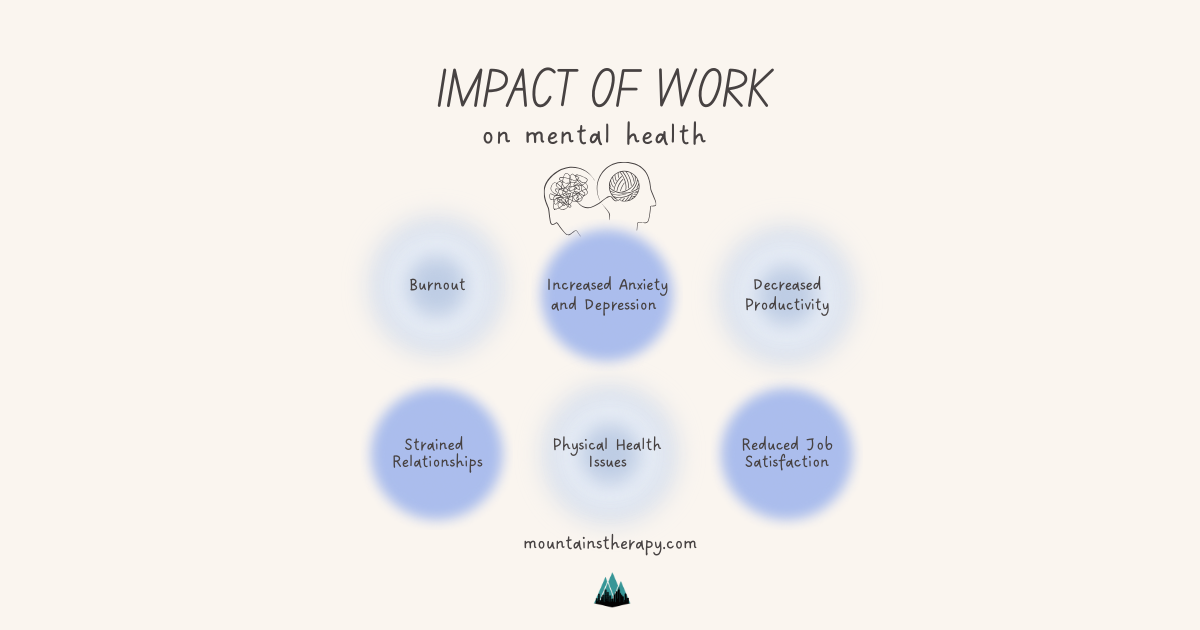
How Work Can Affect Your Mental Health
1. Burnout
- Burnout is a state of emotional, physical, and mental exhaustion that occurs when workplace stress becomes overwhelming. It often results from prolonged work demands, tight deadlines, and the pressure to perform. When burnout sets in, you may experience chronic fatigue, irritability, lack of motivation, and a significant drop in productivity. Ignoring the signs of burnout can lead to serious health implications, making it essential to address early.
2. Increased Anxiety and Depression
- High-pressure environments, unrealistic workloads, and job insecurity are key contributors to workplace-induced anxiety and depression. Persistent stress can cause constant worry, irritability, and difficulty concentrating. Feelings of sadness, hopelessness, and self-doubt may creep in, affecting both your job performance and overall well-being. These mental health challenges, if left unaddressed, can create a vicious cycle of stress and negative emotions.
3. Decreased Productivity and Job Performance
- When struggling with mental health issues, productivity and job performance often suffer. Difficulty concentrating, making decisions, and maintaining focus can become everyday obstacles. Work-related stress and anxiety can also disrupt sleep patterns, leaving you feeling fatigued and unable to perform at your best. This decline in productivity can further amplify feelings of inadequacy and stress.
4. Strained Relationships
- The effects of work stress often extend beyond the office, spilling over into personal life. You may find yourself irritable, withdrawn, or short-tempered, making it challenging to maintain healthy relationships with family and friends. In the workplace, excessive stress can lead to conflicts with colleagues, contributing to a tense work environment.
5. Physical Health Issues
- Mental health and physical health are closely linked. Chronic work stress can manifest physically through headaches, digestive issues, high blood pressure, and a weakened immune system. Over time, these physical symptoms can lead to more severe health problems, including heart disease.
6. Reduced Job Satisfaction
- When work becomes a source of chronic stress, job satisfaction naturally declines. Feeling unsupported, undervalued, or overwhelmed by demands can create a negative outlook toward your role. A lack of recognition, autonomy, and growth opportunities can further intensify these feelings, leading to decreased motivation and engagement.
Strategies to Manage Workplace Mental Health
For Employees
- Set Boundaries:
- Example: Turn off work email notifications after hours and avoid bringing work tasks into personal lives to maintain balance between your professional life and mental health. Setting clear boundaries can also help prevent burnout and protect both your personal relationships and workplace dynamics.
- Example: Communicate to your manager that you are unavailable during weekends unless there is an emergency, to reduce stress and foster healthier professional relationships.
- Prioritize Self-Care:
- Example: Dedicate 30 minutes daily to physical activity, like yoga, walking, or going to the gym, as part of your overall mental health routine, which can positively impact both your personal relationships and work-related interactions.
- Example: Take advantage of mental health days off work when feeling overwhelmed to recharge and refocus. Use this time to practice mindfulness, get outdoors, or engage in activities that bring you joy.
- Example: Use your lunch break to step away from the physical work environment. Go for a walk outside, sit in a nearby park, or practice mindfulness outdoors to help reduce stress and anxiety.
- Speak Up:
- Example: Request a meeting with your supervisor to discuss workload concerns and propose realistic deadlines for tasks, helping to prevent burnout and reducing tension in your professional relationships.
- Example: Share specific examples of challenges during a team check-in to foster a supportive environment that strengthens professional relationships while ensuring you have time for your personal relationships.
- Seek Professional Support:
- Example: Reach out to a therapist or counselor to develop coping strategies for managing workplace stress, anxiety, and its impact on your personal and professional relationships.
- Example: Use an Employee Assistance Program (EAP) if available, for confidential counseling to improve communication and navigate conflicts in both professional and personal relationships.
For Employers
- Create a Supportive Culture:
- Example: Encourage employees to take mental health days off work when needed without fear of judgment, reinforcing the importance of mental health.
- Example: Organize monthly mental health workshops or “lunch and learn” sessions to educate employees about managing stress, preventing burnout, and maintaining healthy personal and professional relationships.
- Example: Provide anonymous surveys for employees to share feedback about workplace stressors and how these might affect their mental health, family responsibilities, and interactions in their professional relationships.
- Promote Work-Life Balance:
- Example: Offer flexible scheduling options, like compressed workweeks or the ability to work remotely when needed, to help employees balance their family obligations, reduce stress, and maintain healthy personal and professional relationships.
- Example: Implement policies that encourage employees to take their lunch break away from their desks. Suggest outdoor activities, mindfulness exercises, or socializing with colleagues in a relaxing environment to boost mental health and prevent burnout.
- Example: Prohibit sending or requiring responses to emails after office hours, which helps reduce workplace stress and support healthier connections in employees’ personal lives.
- Model Healthy Behaviors:
- Example: Managers can demonstrate balance by leaving work on time, taking breaks, and encouraging team members to do the same to prioritize their mental health and strengthen professional relationships within the team.
- Example: Share personal stories about managing stress or seeking support to normalize conversations about mental health and its impact on both personal and professional relationships.
- Provide Access to Resources:
- Example: Partner with local counseling services or organizations like Mountains Therapy to offer discounted or covered therapy sessions for employees, helping them manage anxiety, workplace stress, and navigate challenges in their personal and professional relationships.
- Example: Establish quiet, wellness-focused spaces in the office where employees can relax or practice mindfulness to reduce stress. Encourage employees to use their lunch breaks for outdoor activities or mindfulness practices to recharge.
By integrating these strategies, employees can take control of their mental health, reduce stress, and prevent burnout, while building healthier personal and professional relationships. Employers can create a more supportive, productive workplace culture that addresses anxiety, promotes work-life balance, and supports employees' personal lives, professional lives, and overall well-being.
How Mountains Therapy Can Help
At Mountains Therapy, we understand the profound impact that workplace stress, anxiety, and burnout can have on your mental health, personal relationships, and professional life. Our team of experienced psychotherapists offers personalized support through individual therapy, online therapy, and in-person sessions designed to help you navigate the challenges of balancing work and life.
Whether you’re dealing with the pressures of work deadlines, struggling to maintain healthy relationships, or feeling overwhelmed by stress, anxiety, or depression, we provide tools and strategies to foster resilience and promote overall well-being. With expertise in areas like relationship counseling, stress management, and coping with anxiety and depression, we empower you to build a healthier, more fulfilling life at work, at home, and in your personal and professional relationships. At Mountains Therapy, we are committed to helping you embrace balance, growth, and connection while supporting your journey to wellness.
POSTS
Elevate Mental Health Blog: Best Therapists of Montclair 2024