Anxious Attachment and Avoidant Attachment Partners: Anxious-Avoidant Trap
Learn more about Relationship Therapy and Couples Therapy.
Understanding Anxious and Avoidant Attachment Patterns: Navigating the Dynamics of Relationships
At Mountains Therapy in Montclair, NJ, NC, FL, and UT, we explore the intricacies of attachment styles and how they influence our relationships. Two of the most common yet challenging attachment patterns are Anxious Attachment and Avoidant Attachment. When these patterns coexist within a relationship, they can create a complex dynamic characterized by emotional push and pull, leading to confusion, frustration, and instability.
In this blog, we will explore what Anxious and Avoidant Attachment patterns are, how they manifest in relationships, and strategies to manage these dynamics for healthier, more fulfilling connections.
What is Anxious Attachment?
Anxious Attachment is an attachment style characterized by a deep fear of abandonment and an intense need for closeness and reassurance. Individuals with this attachment style often worry that their partner doesn’t love them as much as they love their partner, leading to clingy behaviors and heightened sensitivity to any signs of rejection.
This attachment style usually develops from early life experiences where caregivers were inconsistent in meeting the child’s needs. The child learns that love and care are unpredictable, which creates anxiety and a constant need for validation in relationships.
Characteristics of Anxious Attachment
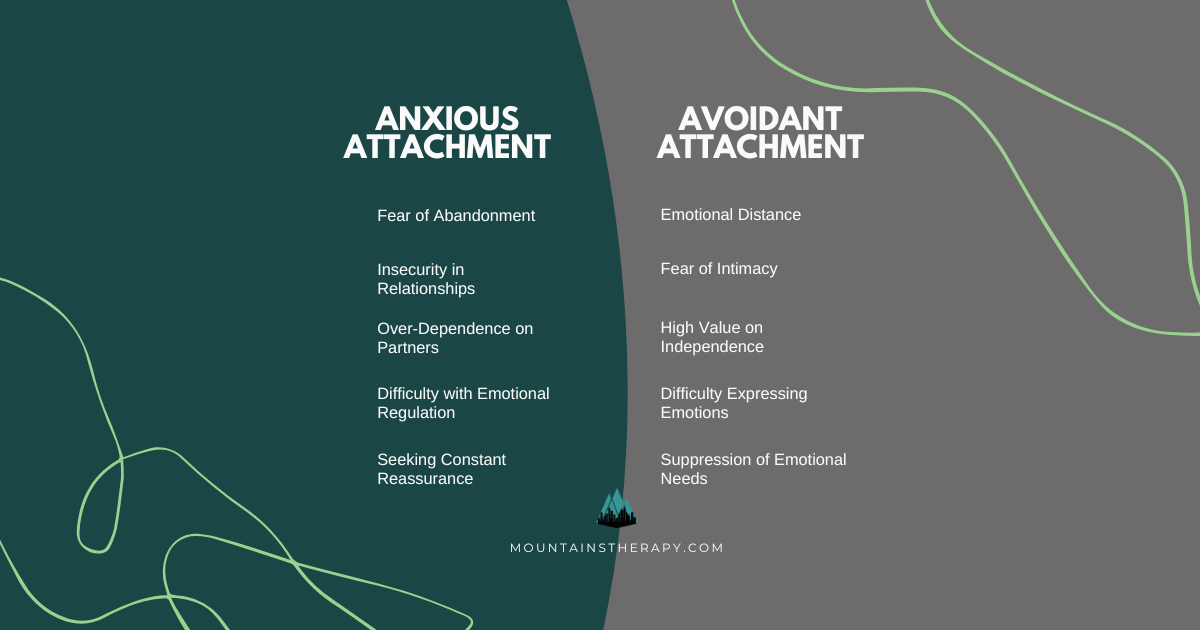
- Fear of Abandonment:
Anxiously attached individuals fear their partner will leave them, leading to clinginess, excessive communication, and constant need for reassurance. - Insecurity in Relationships:
They often feel insecure, questioning their partner’s feelings, which can result in jealousy, suspicion, and trust issues. - Over-Dependence on Partners:
They may become overly dependent on their partner for emotional support, struggling with being alone and sacrificing their own needs to maintain the relationship. - Difficulty with Emotional Regulation:
Intense emotions like anxiety, anger, or sadness can lead to emotional outbursts or withdrawal when they perceive a threat to the relationship. - Seeking Constant Reassurance:
They frequently seek validation from their partner, which can strain the relationship by appearing needy or demanding. - What is Avoidant Attachment?
Avoidant Attachment is marked by a strong preference for independence and avoidance of emotional intimacy, often stemming from emotionally unavailable caregivers.
Characteristics of Avoidant Attachment
- Emotional Distance:
Avoidantly attached individuals often keep emotional distance, struggling to express their feelings or appearing indifferent. - Fear of Intimacy:
They have a deep fear of intimacy, avoiding closeness to maintain independence and avoid vulnerability. - High Value on Independence:
They prioritize self-reliance and may resist relying on others or feel uncomfortable with others depending on them. - Difficulty Expressing Emotions:
They often find it hard to openly express emotions, preferring to keep feelings to themselves and struggling to verbalize needs. - Suppression of Emotional Needs:
They tend to suppress emotional needs, convincing themselves that close relationships or emotional connections are unnecessary.
The Anxious-Avoidant Trap: Understanding the Dynamic
When individuals with anxious attachment and avoidant attachment come together in a relationship, it can create a challenging dynamic often referred to as the "Anxious-Avoidant Trap." This dynamic is characterized by a cycle of emotional push and pull, where one partner’s need for closeness triggers the other partner’s need for distance.
- The Pursuer-Distancer Cycle:
In this dynamic, the anxious partner often takes on the role of the pursuer, seeking closeness, reassurance, and emotional connection. Meanwhile, the avoidant partner becomes the distancer, retreating to maintain their sense of independence and avoid feelings of vulnerability. This cycle can lead to ongoing conflict, with the anxious partner feeling neglected and the avoidant partner feeling suffocated. - Emotional Miscommunication:
The different emotional needs of anxious and avoidant individuals can lead to significant miscommunication. The anxious partner may perceive the avoidant partner’s need for space as rejection, while the avoidant partner may see the anxious partner’s need for closeness as demanding or overwhelming. - Increased Anxiety and Withdrawal:
As the cycle continues, the anxious partner’s insecurity may increase, leading to more clinginess and demands for reassurance. In response, the avoidant partner may withdraw further, creating a deeper emotional rift and perpetuating the cycle of distress.
How to Manage Anxious and Avoidant Attachment Patterns
While the Anxious-Avoidant dynamic can be challenging, it is possible to manage and even change these attachment patterns with the right support and strategies.
- Therapy and Counseling:
Therapy is essential for managing anxious and avoidant attachment patterns. At Mountains Therapy, we offer Individual Therapy and Couples Therapy to help individuals and couples understand their attachment styles and develop healthier ways of relating to each other. - Developing Self-Awareness:
Building self-awareness is key to managing attachment patterns. By understanding your attachment style and how it influences your behavior in relationships, you can begin to make conscious choices that promote healthier interactions. - Improving Communication:
Effective communication is crucial for navigating the Anxious-Avoidant dynamic. Both partners need to learn how to express their needs and feelings clearly and constructively, without resorting to blame or defensiveness. - Practicing Emotional Regulation:
Learning to regulate emotions can help both anxious and avoidant individuals manage their reactions in relationships. Techniques such as mindfulness, deep breathing, and self-compassion can reduce the intensity of emotional responses and promote more balanced interactions. - Building Trust and Security:
For both anxious and avoidant partners, building trust and security is essential. This involves creating a safe space where both partners feel valued and respected, and where their emotional needs are met in a way that feels comfortable and supportive.
How Mountains Therapy Can Help
At Mountains Therapy in Montclair, NJ, NC, FL, and UT, we understand the complexities of Anxious and Avoidant Attachment patterns and how they can impact relationships. Our experienced therapists are here to help you navigate these challenges and develop more secure, fulfilling connections. Through Individual Therapy, Couples Therapy, and Family Therapy, we work with you to explore your attachment patterns, understand their origins, and develop healthier ways of connecting with others.
Anxious and Avoidant Attachment patterns can create significant challenges in relationships, leading to cycles of emotional push and pull, miscommunication, and distress. However, with the right tools and support, it is possible to manage these attachment styles and work towards more secure, balanced relationships. If you’re struggling with Anxious or Avoidant Attachment patterns and want to take steps toward healthier relationships, contact us at Mountains Therapy in Montclair, NJ, NC, FL, and UT. We are here to help you on your journey to emotional well-being and secure, fulfilling relationships.
Contact us to connect with an Attachment Based Therapist an Attachment Based Counselor.
POSTS
Elevate Mental Health Blog: Best Therapists of Montclair 2024